4.4 The Roma Lopes Interview
With hosts Matt Sitas and Aiden Loughlin · · Listen on Spotify
Guest: Roma Lopes (@trenchf0ot)
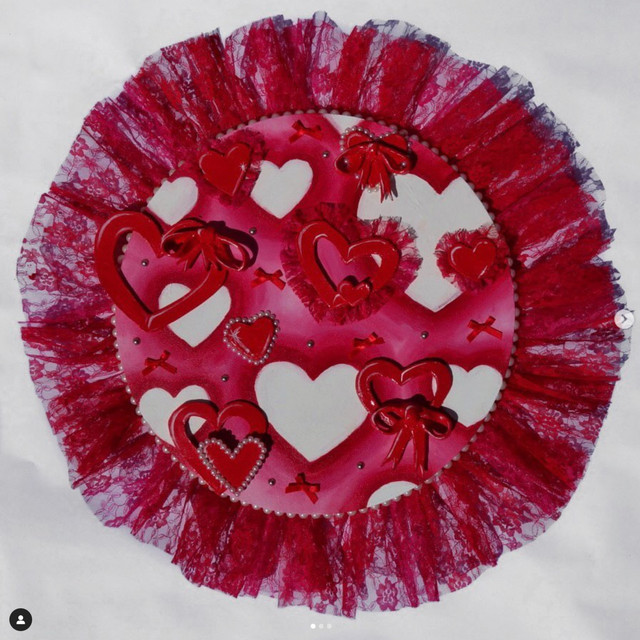
Roma Lopes joins Matt and Aiden to talk Private 51, beach carts, ironic DJs, campus culture at NAS, combat sports and graffiti.
Transcript
Cool. Alright, well, hello. Can I have a drag you up, babe? Yeah, of course. Welcome back to Hung Up. This week we’re hanging out with Roma Lopez, who’s a visual artist,
can I say a visual artist, doing big and colorful shit. Here she is, Roma, say hello. Hi. Hey Roma, what’s up? Not much, just chilling. Thanks for having me here. Of course, of course. So, we did a show like a little while ago on Private 51, but I don’t think we actually asked anyone about it in person.
We just like went and then, you know, vibed out. Did you guys enjoy it? I loved it. Aiden liked it too. Aiden loved it. But we would love to hear like your experience of that and like, could you just recount that story? So, it was like this weird thing where, you know, I saw the Instagram before I even knew about it and everyone was posting all that crazy shit and it was just like, what is this?
Which I think was the entire point, right? And I actually asked if I could be involved. Cool. And I think sometimes that’s a bit hard, you know, because it’s like really hard to just be like, hey, like, but there was just so many people involved and that is exactly what the exhibition was about. It was just about getting involved and like doing something and adding to this big like catastrophe of shit in the room.
Yeah. It was great. And, you know, it was really just like a beautiful week and really was like just having somewhere to hang out every day. Yeah. You know, we just set up little lawn chairs and they’re like every day. And every day they had like a different little event. Like, I remember this one time it was the day after community chest and I hadn’t slept and I came straight from the party. And I just like slept in the gallery and the floor was covered in hair because that day they’d been like a barber.
That’s right. They didn’t free haircuts all day. Like, you know, it was just great. Really, really, really enjoyable. Really fun. Really like doesn’t take itself seriously. Yeah. It wasn’t super like highbrow or anything, you know, people who were involved who had never made art before. And then there was other people who’d been making art their whole life. So it was interesting.
Yeah. Everything. And did you have a go on the Instagram? I heard that the like password, like everyone had the password or something. Yeah. I had a couple, I had a couple of goes, but it was just like silly photos of friends kind of thing. It was, it was a bit overwhelming. I was like, I don’t know. Am I missing something? Yeah. What do I post? Yeah.
Yeah. I think that was the joke. Yeah. I mean, I think a lot of us were following just like in awe, just like, wow, you can do that. You can do that. You can do that. You know, like just the, just the concept of it was remarkable. I thought. Yeah. There’s no rules on the internet. Like we’ve been talking lately about like the grid, like the Instagram grid feels more like sacred than ever.
Yeah. Like it seems like people are posting to the grid, like less and less because it’s like, you know, this has to be a really worked out thing. But that kind of reminds us that like you can have a thousand posts in a week if you want to. Yeah. Yeah. Yeah. There’s like invisible rules. Yeah. Yeah.
Yeah. Actually, you know, no one’s the Instagram police. I’m going to get you. Yeah, totally. It does feel like that. Yeah, it does. We have created a pretty rigid. I was just reading an article about this. I think it was called like the eternal September of like 1993 where like the internet opened up to everyone because of like Netscape or something. So before it was just like you had to be quite like tech savvy to get on the internet.
Right. And the internet had like kind of created this like subculture. And there was a fucking funny t-shirt. It was like big block letters. It was like the internet’s full like fuck off. Fuck off. I think because they were really pissed at what you know the internet then right after that it was like MySpace, Facebook, Twitter like in the next 10 years. Yeah.
And they were saying what what did they say some some they were interviewing some super like online guy and he was like the normies bought brought like the psychosexual drama of the real world onto the internet. And they were pissed. They were like fuck you made it like a yearbook and like a popularity contest. Yeah. And we can see that now right. Yeah.
Yeah. Yeah. Like that is the internet for a lot of us. I’m like just old enough to remember that internet, but I was a bit young to really be an explorer on it. It was just like it was like this funny thing that my computer could do that I didn’t really understand. But I remember the look of it. That’s really the main thing, you know, and it’s it’s so funny when you see something like from that.
Let me find this is really random, but in the photo biz in Sydney, there’s it’s really cute. Actually, it’s like this very Sydney thing. All of the fashion shoots on all of them, but like 90% I would say of like fashion like big box brands have like a shoot on the beach at some stage. You know, you have to answer.
So all the photographers have this like one beach cart that they use and it’s like the famous beach cart. I’m going to pull it up now. Yes. And the website is like still in the 90s. Like, isn’t that cute? Oh, fold it. Yeah, fold it. And it’s like designed to be like that wide. Like I’m narrowing the thing.
It’s like this ancient monitor that you would have had to look at it on. But yeah, like that’s the look that I kind of remember. Look at that picture. They went with a gray background, which no one ever does. Yeah, beautiful. Yeah. Like just an old school HTML. Yeah. Yeah. I love it. And those do like when I see a website like that, it does kind of trigger something like I guess it’s like some kind of nostalgia, but I wasn’t really part of that internet.
Yeah, it’s like this weird architectural thing, really specific time period. Yeah. Yeah. Right. It’s like an architecture. Yeah. Yeah. I remember like in second year or something, someone showed me, they were like, oh, look at this. And they looked up like font generator and then put like a filter on the searches.
So, it was only like late 90s, really early 2000s. Cool. And the first website that came up was just like incredible. Yeah. You just write a little word and it would generate this like flaming text like in like, you know, but like really specific. Right. Like this very specific time period, you look at it and it just like, it was like, well, and once again, like I wasn’t super in that.
But yeah, I still feel like it was like there when I was little. Yeah, totally. It still does bring me back to something, you know. Totally. And fashion feels like it’s been kind of obsessed with some of those similar aesthetics. It feels like forever now. Yeah. Like five years or something. Yeah. But we’re still going strong. Yeah.
Truly. We’re really, we’re really sticking with it. Yeah. It’s like, it’s like, it hasn’t even finished. I think. I don’t think that, that idea would, I don’t think we’re done with that yet. Yeah. It’s just, there’s something like quite silly about it. And I think that’s what people are drawn to. Even in music too. Like I’ve, I’ve been to a couple, you know, parties and stuff. Like, um, I don’t know if you guys know Thorsten, but yeah, he’s been doing like, like, you know, like mixing, like, you know, Rick Astley and like all this like silly, like the fog horn.
Like the, like fog horns and stuff. Yeah. Like a boss. Yeah. Like the sets. And it’s so funny. And it’s so enjoyable. Yeah. I mean, I feel like we’ve kind of gotten over some kind of seriousness that we developed after that stuff was a thing. Like some of my mates are saying like epic as like, and like, it’s like come back around, you know, like, I’m like, yeah, it is epic.
You know what? I feel like, cause yeah, like we kind of, Oh, it seems like we kind of pushed back against some of that stuff in the super serious, like hipster 2012 era. Yeah. And we’re like, no, we’re going to take everything super seriously. Yeah. Like we’re all reading novels and like leather shoes and shit. Yeah. Yeah. Maybe we should shut the windows.
Let me do that real quick. The chaotic, let me just take that thought again. What I was interested in though, is like the relationship to some of these things and like irony. Cause like, yeah, it’s, it’s funny. Yeah. Like, are we still doing, cause I’m kind of like, I don’t know, a bit allergic to just like, do you know what I’m saying?
Like some of that stuff, like, Oh, it’s just a joke can also go into this sort of nihilistic. Like it’s ironic. Like I’m not, I’m not comfortable being vulnerable with my real opinions, but I’m not necessarily like, it doesn’t feel like we’re just doing that. Yeah. With some of this stuff. But I don’t know if you guys have any thoughts on how this stuff fits into that.
Yeah. It’s like almost like, you know, the sillier it gets, there does have to be like, or for a lot of people, there does have to be this kind of like subtle undertone of, Oh, but I’m like, I’m joking. I’m not that I’m not being serious about how silly I’m being. It’s like, you know? Yeah. I don’t know. It’s a bit, yeah, it’s a bit of a weird one, isn’t it? It’s like, people can’t just really let go and just be like silly for the sake of being silly.
That’s it. You know what I mean? Yeah. Yeah. This is layers. You’re wearing, I’ve forgotten. I’ve forgotten. Is it Maddie Feist? Yeah. Yeah. Like her stuff. Yeah. Roma’s wearing a big Maddie Feist ring that says darling her. Yeah. That was a post art school. Yeah. Yeah. Yeah. I got given it as a gift.
Yeah. Cool. Yeah. Yeah. It’s like, no, it’s like loads of colors and jokes. Yeah. And we really loved that. And that stuff still stands out in a gap, like, especially in a big serious grad show. It’s like, fuck you. I’m making jokes. Fuck you. It’s bright and colorful. For sure. Yeah.
Yeah. Super, super lovely. Yeah. Like, you know, you can’t just rely on, oh shit, being colorful to draw people in. But in some cases, it really does just work. Especially, yeah, I feel like at the grad show, it really did stand out, you know? Yeah. Because of the other things. Yeah. I wonder how, like, maybe it’s like a, it’s almost like a market, you know, force thing
where it’s like, you know, if something’s really expensive, people make it, you know, a cheaper thing. Like, I wonder if like, is there any limit to making funny stuff? Like, will it seem like a cheap shot at some point? Like, it just, it seems like there’s still so much serious, serious, like even the writing about art. Like, I was reading a certain, we won’t say which one, but I was reading a certain, like
periodical. And that’s, I was thinking the whole time, like, is there any, like, do you guys remember like from high school pathos and logos? Like, like, is there any pathos, like, in any of this, like, is anyone trying to convince me of something or just like, just like telling me stuff, you know? And it’s like, yeah, I just want someone to write like a, like, a, like, a, like, a fiercely, uh, defended argument about something, you know, in art, which I’ve been looking for,
like, something about that. A really, just one really strong opinion, please. Yeah, totally. Yeah. I think that would be cool. Like, I, um, I did a lot of music history stuff at uni and I was like, kind of into it. It was mostly like, there was this composer from Germany and then there was this composer from Germany. And I was like, yeah, okay.
And that stuff, like, whatever, it’s like, cool to know if you’re really into music, but all of the theory stuff about like how music works that, that I was like, I don’t need to know it’s going to influence. Now I’m like teaching myself, like from just being online and reading about it and like watching videos. And it’s like, oh, actually it’s like, it’s opening up a lot, you know, of, of like, just
just deepening my understanding in a way that I didn’t know was possible. Like, do you, do you feel that about like art theory? Is that, does that translate to visual art? Yeah, definitely. Um, yeah, definitely. I feel like, um, you know, we had like, you know, incredible art history at NAS. It was great. But at the same time, I feel like it, and NAS is great because it’s such a, actually such
a small part of the overall, you know, being there, you know, you’re just mostly in the studio. It does just feel like this thing that’s like slightly informing everything else more like just like an extra step to getting where you’re going, you know? Um, and you know, a lot of less like technique, just talking about works for the sake of talking about works and a lot of like historical context, which I think was really like quite amazing.
And it made you realize, oh, this is actually what people take from the world when they’re just being, you know? Can you, can you unpack that a little bit more? Like people take from the world instead of just being, I really like that. Yeah. I feel like if you’re looking at all these old, like old classic works specifically, like, you know, you really do need like the way, like the whole reason is effective is because
it’s like the way people are feeling, blah, blah, blah. And having that content, I don’t know. It’s just, you, you, you have the context, you look at the work and you’re like, this is what people were saying. This is what people were doing. Right. And, and you can relate that to them, like just being now, you know, it’s like, this is why, like, can you look at your own work and you’re like, oh, I’m drawing these things because I’m experiencing similar things in different ways, you know?
I do know what you mean. Yeah, totally. Yeah. I think there’s like, there’s also been some interesting stuff that I’ve seen recently about like rereading older work. Like, you know, it’s like, they, you know, art sort of teachers and art writers had stuff to say about like important works from the time.
But then like, I was listening to this thing, I forgot what podcast it was on, but it was like basically doing a big fat rereading of like all of modernism. And it was like a really interesting, like new interpretation. And like, it felt very true and, and like informative and like youthful for me as an artist somehow, you know?
Definitely. I just wanted to just, I had one more question about like Private 51 in a more like general sense. Cause it seems like that is very much not like obviously the normal way a show is put on. Yeah. And it’s like the ratio is fucked. It’s like 900, you know, just regular openings, white walls, like whatever.
We stand around, we drink. There’s not really like nothing unexpected is going to happen. And on opening night, like you’re not even really there to be moved by the work. Like, so I’m just thinking, yeah, in terms of that question of like fun work, but serious work and like how much space there is for that. It kind of like, why is there like, why has that?
I mean, I’m sure there’s been more, but why is there so few like Private 51s? Why is there like, we’re still kind of sticking to the rules in like showing art? Yeah. I feel like, you know, although we do make art for ourselves and all of that, there is something to be said about trying to be successful or trying to make something of it. You know, it is kind of like, I guess in a weird way, the dream, you know, but you obviously
you also kind of don’t want to admit that, you know what I mean? You know, I’m just fine. No one knows my stuff. I’m fine. It’s just for me, you know, but, but it does feel good. And I think with, with private, it was, it, man, I think people are just a bit scared or it’s just easier to stick to what’s, what’s the standard. Yeah.
What’s the standard. And, um, yeah, also, you know, cause with private, it was, it was actually hard to look at the works cause it was so higgledy piggledy like everywhere. You know, there was no, no way of differentiating whose work was whose, you know, and you kind of had to find things like where’s Wally. And, um, when you did find something that kind of like, was like, oh, that’s lovely.
You really had to like, kind of like look around things to get there. It was like a bit of effort. And I think when you did find something to look at, you properly appreciated it. Yeah. It felt like being in one of those like really crowded vintage shops and like too much to look at, you know? You know, and it’s like, you sort of need to just stand still and like look at one little
part of the wall for a bit. And then like all these things jump out at you. Yeah. Yeah. I had so much fun on that opening night. I thought it was fucking cool. It was great. I remember Mac, um, walking around wearing this vest covered in ceramic pins. Yeah. You know, sign pinned to him that was like ceramic pins, $20. Yeah. It’s like, I’m the wall. Yeah. That’s so cool.
It was, yeah. Just little things like that. It made it feel a bit less like, oh, I don’t know. I just feel like I could even enjoy the art a bit more than I usually do an exhibition opening. Cause once again, I feel like a lot of gallery openings in Sydney, they just become like social occasions, which is lovely. And that’s like, you know, thank God that art is bringing us together like that. And we do have the community that we have, but, um, it’s just so nice to shake it up a
bit, do something a little bit different. And yeah. Yeah. Do you know, you might not know, but do you know if much work was selling through that? Cause it was like an eBay. Yeah. I don’t know how well the eBay thing worked out. Um, I don’t think much sold. Okay. Um, I got, I did get one offer for that little pillow I made, but, um, it’s like all the stuff
sewn onto it is things I’ve collected since I was a literal child. Like I’ve got like this silver cross from my high school that they gave us when we graduated and stuff. And I just, I just couldn’t part with it. You know what I mean? It was like the kind of thing where it was felt really good to get that offer, but you know? Yeah. Interesting. Cause we were talking to someone on the weekend who went to SCA and at least in their view,
they were kind of, um, talking about like this concept of like making it at least financially. Like when we say made it, I mean, in my head, I’m kind of thinking for a lot of artists, it’s like, I don’t have to work a day job. Yeah. I don’t have to make coffees anymore. I have to make coffees anymore or whatever. And they were saying like the SCA model is where less trying to make like art objects.
We’re more trying to like get that bag through like funding and like whatever it is. Like, it’s kind of like, we’ll get our money, like kind of because we’re good, like, or whatever. We’re like developed artists and our money will come kind of through things on the side. Yeah. And in their view, they were kind of saying NAS is more like traditional in the sense of
like, you know, our artwork will be expressive and we’ll, we’ll get something out of making it, but also the art object itself will be the thing that, you know, we’re trading it in that really too. Like, yeah, this thing costs 10 grand and that gives me three months of living expenses. Yeah. Shout out to, that was Felix Ashford at a Gemma’s party on the weekend.
And another thing that they said was that kind of NAS, like, I mean, you can like tell us if this feels true, like NAS kind of encourages you to build up a bit of a stock of stuff that you can like sell later on, you know, whereas yeah, SCA was more of a conceptual, like I’m preparing you for this kind of concept. Yeah. Does that feel true?
Yeah, definitely to an extent. Like you fully have classes that are like teaching you how to build a website to, you know, put your art up on and how to have like a proper art CV. It is very like almost businessy in that sense. Yeah. But at the same time, isn’t, you know, like it does kind of celebrate both, but, but there is this general attitude of, or, you know, even like this intrusive, like kind of thing
where everyone does want to be successful, especially because you’ve been taught by these incredible lecturers and stuff who have successful careers in their own right. You know what I mean? Like really successful careers. So there is this, you know, this community of y’all, you’re being surrounded by and being teached by these people who are incredible. Yeah. You know, and you kind of just want to get there yourself.
That is the vibe I get is that the teaching is really high quality. Yeah. Yeah. And, but yeah, and quite chill too. Like you really do develop relationships. And, you know, I know some people have like these incredible relationships with like high school art teachers or whatever. Sure. I never had that, you know, I never had that. I was a bit of a naughty kid. Like they didn’t like me, but at NAS it was like, you really did get to know your lecturers
as just other people in this space that you had to go to every day, you know, which was really lovely. And, you know, I think all the, you know, NAS actually does have a pretty incredible education and stuff. And I think a lot of people just like me would kind of cruise through and a lot of what you get from it is the social aspect and you meeting people and like learning like how to talk to
other artists and like, it’s just feeds itself. And I feel like that kind of, that’s like that traditional uni culture, that really social, like, you know, everyone’s doing projects and shit together. And I feel like a lot of other unis don’t have that, which is really sad. So I think NAS can be like its own thing in that sense. Like I had a friend who was at UNSW up the road and they’d come and meet us at lunchtimes
and stuff and be like, we just don’t have this culture. Yeah. People don’t sit and talk with each other. People don’t talk to like, like other people on campus really, unless you have a reason to. That seems like one of the most important things. Yeah. Yeah. You really just forced into this like pit and it’s almost like high school where you have lunch at the same time. Cool. So you’re all kind of forced to get to know each other.
And it was just like really special, really nice. I don’t know. A lot of people talk shit on NAS because it’s so insular and stuff. Yeah. It is. There isn’t many places like that anymore. I feel like. I guess you would feel that kind of like protective, like instinct if that community feeling was so strong, you know, like if you’re having lunch with these people every day, like,
how could I, how could I not? And then go to the pub after. Yeah. Totally. Lectures are coming with you. You know what I mean? Totally. I wish I fucking had that in my BA, but there’s something also about just the nature of like making things and, and just, you know, the way like an art school is just so different to, you know, BA, like, you know, where even though we’re like talking about, cause
yeah, I started at UCED and I put the last year that I studied, you could do creative writing as an undergrad, but for most of it, you had to be a master’s student. Yeah. There wasn’t really any subjects where you could create anything other than an essay, like a private argument basically. And it kind of, you know, you’re sort of being trained to be an academic. Yeah.
Like erases myself naturally to like fun really. Yeah. One time I was like in my creative writing lecture and I wrote a poem about how weird it was to be like in this classroom, like sitting down at like these big white desk with a bunch with a bunch of kids that wanted to be teachers, like trying to fucking express our heart and shit with bad poetry.
And like my teacher didn’t really like get it. I mean, it probably was a bad poem, but he was kind of like sort of mad that I was like critiquing. I was like, bro, this is weird. I’m sorry. Like it’s weird to be in a room fucking silently writing poems. Like we should be like, I don’t know, at the pub or something. I don’t know. It’s just, oh yeah, we should be sitting like,
it’s just, it’s like stuffy. Especially in like that kind of room. Very manufactured. Exactly. It was like, guys sit down and write poems. Exactly. It was weird. And they tried to do a little bit of stuff. They were like, walk down the street. I’d like, but it just, it never, it needs a lot of work. Whether it’s work or just time. Like, you know, of course, I’m sure you guys weren’t like besties day one,
but if you’re fucking hanging out and over time it’s going to develop. And that’s what I think, like, yeah, I was kind of wishing they would have it used in, but it’s just not. And you can see like every NASCAR ad show, you go up, you look at the art or whatever, and you can see how everyone’s almost biting everyone else. You know what I mean? Everything’s like quite familiar.
There’s a lot of similarities between everyone’s work. And you can look at that and be like, oh, like, ew, like do your own thing. Yeah. But you could also look at that and be like, these people have worked together for three years. Like they’re having these conversations. They’re talking to each other every single day. Obviously, everything’s going to talk to each other, you know, and it’s quite beautiful.
Because like, in what other contexts does that happen really? Hundreds of times. Unless you’re making something for a conceptual exhibition or whatever. And even then, you know, it’s not the same as working with the same people for that long. A hundred percent. And like post uni, the world just gets more and more like insular and like this scary individual capitalist, like narrative of like,
this is what I have. And it kind of encourages you to like, you know, unless you go out of your way to, you know, create community and do like art and collective things. Like you can create a very like individualized outlook. Yeah. Which I don’t think is for the best. Yeah, totally. I actually had a friend stop making art.
Someone who makes quite incredible work. I won’t say who, but they had like a full break from making things because they were just like, I just feel so lonely. Wow. So they started like doing like jujitsu again and like, you know, just doing other shit that, you know. We should roll. Tell me off mic who this person is. I do jujitsu.
Sounds familiar. Yeah. I would love to roll with an artist. He’s great. I don’t know. I’m usually just rolling with that. I did judo for like four years and I did like MMA for a bit. What? That’s sick. It’s crazy. All right. We’re going to roll on the podcast. Do you still like MMA, Roma? Yes. Do you still watch MMA? Look, I’m not like into it the same,
like same way some people into it, but I have my, I have my favorites. Like Izzy Adesanya. Oh yeah. Izzy’s fighting in a couple of weeks. Thank God. Izzy. Adesanya’s the official, he sponsors us. Yeah. He’s our main sponsor. Do you, I’ve been trying to get like non-MMA people, at least, you don’t have to watch it with me.
Like I get it, but I’m like. You just got to agree that it’s not done. Yeah. That’s what anyone wants. That’s what anyone wants. Can you speak on that? Like, do you still fight? Yeah. Like, cause I’ll go like, it’s beautiful, but can you speak to the listeners who maybe have never seen MMA or like think it’s stupid? Like just your experience or your takes on like, yeah, what beauty there is. I feel like,
well, it’s just like dancing, isn’t it? It’s like, there’s nothing, like nothing turns your brain quite like off quite like, but you know, like a punch to the head, full stop. But, but you know, then just like standing in front of someone and, and like fully using your entire body to do something so animalistic, like take someone down to the ground.
Like it’s like incredible. And, you know, I can definitely understand why it’s not some people’s cup of tea. Like you get to like the title, find this blood on the mat from like five fights ago. You know what I mean? Right, right, right. So, you know, definitely not everyone’s thing, but I think that, you know, it’s all consensual. Yeah, totally. Totally. And it’s,
it’s like a real, just innate skill, like something that’s kind of in everyone, but, but yeah. Especially in this age of like super disembodied Instagram, like nothing’s real. Even the stuff that’s not real is like even more not real than we ever thought could be possible.
It’s like this super real thing. Like I’m using my body against your body to try and like defeat, you in this, like this, like super clear cut, like binary, either you did or you didn’t kind of way. And it’s just like that, that reality, that realness of it is what blew my mind. Like Aiden was like, you have to come to jujitsu. You have to come.
And I was like, no, it’s violence. I’m not coming. And then I finally went one night and just had a fucking like revolutionary. And the adrenaline, like nothing feels better. It just feels, you feel so strong and powerful. And like, you know, and also like, it’s not a team sport, but it is a team sport. You,
the, the gym you, you go to and train, like you get to know everyone so well. And, and you know, although you’re fighting each other, technically one-on-one, you, you learning from each other. And there’s just like fluid motion of, you know, going between each other. And yeah, general understanding. Beautiful. Hung up’s going to start doing weekend roles.
Yeah. Thank God. So cool. A bunch of fucking arty motherfuckers. Oh my God. Like really nice. Like there’s a few people who are in both worlds. I know. Yeah. Yeah. We should all, we should all make up and roll. Yeah. Get some names. Do you guys know Tommy Carvin? No. Oh yeah, we do know Tommy Carvin.
Yeah. Oh yeah. TC art. Yeah. Yeah. Yeah. Plus like the mean boxing. Oh yeah. He’s crazy. I remember in first year, I was like, we talked about his paintings. I was training like four times a week when I was in first year. It didn’t last long. Cause I was like, Oh, it’s expensive. I want to go to the pub, you know, but I’d like finish NASA and go training. And I remember seeing him just in the,
in the grass, like at lunchtime, just airboxing, nothing, you know, by himself. And being like, who is this guy? Like, I’m going to have a conversation with him. Yeah. Yeah. I was, I, my, my dad’s like Cypriot. And so I kind of grew up getting read to me, all the like ancient Greek stuff that like is kind of,
I think normal for like Greek households. And like, yeah, going to, um, jujitsu made me feel like, Whoa, this is what those guys were on about, you know, like that beautiful, like ancient, like, I mean, they were doing it in the nude, which is like, I think that’s a bit too far for our modern, like sensibilities, but yeah, that sounds fun.
I know. Yeah. Like nothing sexual about it. Like I think, yeah, that’s another thing. It’s like, um, there’s not many contexts in which you get really close to someone like that, like really physically close and it’s not sexual. I know. Yeah. It’s beautiful. Yeah. Fuck. We’re like a stranger sometimes. Like when you’re completely,
yeah, you’ve never met before. Yeah. I thought about too, and we could be a really cool way to like travel, like travel and drop in at gym. Like you’re in Japan or whatever. You can’t speak the language. Notoriously hard culture to like break into as a foreigner and feel some sense of, but like you’ve got a language. Yeah.
Exactly. No, it’s so true. And you know, Japan, Japan is where, Oh God, I hope I’m right on this. I’m pretty sure I am, but I’m pretty sure Japan is where judo started. Um, I went to Japan when I was 18 with my family and I remember like desperately wanting to find a gym to just look in, but I was, cause I’m in Australia when I was competing and stuff, there’s like a Ippon or a Wazari.
So that’s how you get points. and right. In judo. Yep. And Ippon is when you throw them and they’d land directly smack on their back. On their back. Yep. And a Wazari is kind of like a half, but in Japan, there’s no such thing as Wazari. Right. If you want to win, it has to be an Ippon. Cool. It has to be a clean shot. Cool. Nothing. You look at it and you know what you,
you see what you see. You know what I mean? There’s none of this in between kind of, Oh, you almost got it shit. Yeah. So that was really overwhelming. So I didn’t end up doing it. Yeah. Yeah. Yeah. But it’s very serious and really beautiful. And they take it really like, you know, it’s, it is an art form, you know, and it’s, yeah. And even in Thailand, I really wanted to go see some live Muay Thai and I just got so broke so fast.
Couldn’t do it. But there’s bars that have full cages in the bars and people just like drink a couple beers and challenge someone and they’ll just fight. But, you know, it’s quite, it’s quite beautiful. It’s also like a reason to have a conversation with someone, you know, it’s like, Hey, let’s, let’s get in there. And then imagine the kind of conversation you can have after that as your,
as your introduction to someone, like I’m going to fight you and then we’re going to hang out. That’s so cool. It really is great. Well, I think the listener act like has to be convinced by that. Yeah. Right. Fuck off. Yeah. Come on. If you’re not convinced, that would be beautiful. Come on, bro. Come on, bro. Let’s talk about your art a little bit. Can we?
Sure. So we’ve like, I don’t know if this is going back in time a little bit for you, but we’re, we’ve been talking a lot, me and Aiden about like graph style and like graph related aesthetics. And like, we just wanted you to kind of, I don’t know, like we’re looking at your Instagram, you’re like art Instagram now.
And if we go down like one sort of section of the grid, like this kind of like this character and like the church of Christ thing that I’m sure everyone knows already, you know, and like just this like graph style. Can you like, can you tell us about, you know, your, your history with it? And like, maybe what, what you’re,
I think, cause this isn’t like, I’m looking at the angry hammer, which I love. And like, I just want you to like talk about what you’re, what you’re combining graph with, what you’re like bringing to that sort of aesthetic. So I feel like my relationship with like graph started. I remember being in very early high school, maybe 12 or 13 and like nine news or seven news or whatever did this,
like, and it was like these like 13 year old kids, like my age hanging off the back of trains painting. And I remember seeing that on the TV at my grandparents house in between like deal or no deal or whatever. And just being like, Oh my God, I can’t even imagine like, like I can’t imagine putting myself in that position, like so terrifying, but incredible.
And they were like kids my age, you know what I mean? It was just, you know, and I’ve, look, I’ll be honest. I’ve never really gotten to that point. I’ve done like a, you know, I’ve spent some time on the tracks, you know, I won’t lie, but I’ve never painted a train. I’ve never gone that far. But, um, I just remember being like, just, I don’t know why, but it just like got me, you know? Um, and I think that like,
as I’ve gotten older, I’ve, I’ve kind of tried to examine that a little bit more. And I’ve realized that the, you know, growing up, especially around Marrickville and stuff, you can really situate yourself in a time and place. If you know what you’re looking at, depending on what artists you can see on the walls, you know, which area of Sydney you’re in, you can tell when they were painted. So it’s got this really nice, like time and place thing about it,
as well as this like mix of destruction and creation, you know, depending who you’re talking to. Um, it’s also like a very tangible way to change your own city’s landscape. You know what I mean? You can really just go and do it in a couple hours and the next morning, you’re going to wake up in the sun and see a wall that you’ve like affected or whatever,
you know? Yeah, totally. I love that. I love that. I’ve actually never thought about it like that in terms of the, the sort of two concepts of like, um, creation and destruction. Like my parents would definitely say it’s, it’s vandalism. It’s destroyed. But yeah, like to me, it’s technically an addition, right? Yeah. Yeah, totally. It’s, it’s like, yeah,
it’s additive always. Even the like competing, like taggers might destroy each other’s work, but it’s really just adding another layer to this thing that we’re both agreeing on at like some fundamental level. Yeah. Yeah. Really cool. And there’s also, you know, you, you know, depending who you are, you spend money or pay or you, you rack it. Yeah.
The proper way, you know, totally. You know, you, you spend this time and effort painting this massive thing. And once you, you’re there, you have to accept that it’s ethereal, you know, it could be gone tomorrow. Yeah. And all that effort that you put in could just be gone overnight. And that’s just part of it, you know?
And, um, you know, there’s also all these like rules if you know what you’re doing, but they’re, but they’re like these kind of unspoken rules if you know, you know? So it’s like this weird thing where you have to accept what happens to it, but in some parts of the graph culture, you know, there is actual consequences. Yeah. And it, yeah, it’s just, um, it’s just a really interesting, you know,
thing. And I think people like, you know, there’s not much art making where you really have to put yourself on the line and the penalties for getting caught, they’re not small, you know? So this is like people who are really putting like, sounds a bit much, but they are putting their freedom on the line. That’s fair to say. Painter painting. That’s fair to say. Yeah. And that’s more than what we can say.
Yeah. Yeah. I just like take pretty pictures. You know, like what’s at risk? What’s at stake? Yeah. Yeah. Cool. I like that one. That’s kind of the way you’re going to get. True. True. True. I wouldn’t say that. No one will even tell you if they don’t like it. That is the worst part. That’s the worst part. You don’t even know if they liked it or not. Well, you kind of,
they’re like, if our current, like we’ve been talking to people about like, do you say your friend’s art is bad or whatever? And like the current, if it is bad is like, you just don’t say it’s good. Yeah. Yeah. Yeah. There’s ways of nicely like getting the information you want to say across without straight up being like, could be better. You know what I mean?
I think there should be a little bit more of that. I’ve got a couple of friends who I really can rely on to be pretty critical. Cool. And I really appreciate that. You know what I’m saying? Like, like, um, and it also does like indicate this certain closeness and it does kind of make me feel a bit nice, you know, to hear someone be like, you know what? Not my favorite. Yeah. You know, it would have been nicer. I like this element. Don’t like that.
Yeah. Maybe work on something with more of that or, you know, when someone’s that real with me about something that I’ve made, I’m just like, I love you. Thank you so much. It’s also like someone’s really looking at your work and it’s like proof that someone’s like actually like looking and considering something that you’ve made instead of just being like, oh, that’s a nice picture. Yeah. Yeah. You know, totally. Yeah. That’s one thing that artists do say about this podcast a lot of the time,
like, especially if it’s someone we’ve never met, that’s like the first thing they’ll say. They’ll be like, fuck, it’s so nice to hear like two strangers or two people from like, you know, in the art scene, but outside my circle actually sit down and talk about my work for five minutes or 20 minutes. So yeah, that’s like a project that’s ongoing, I guess,
like for all of us is to find out a way like, cause yeah, like if you, if I send you something and you’re honest and you don’t love it, like it doesn’t really hurt. It feels like loving. Yeah. But yeah, like if someone, if it was like writing, like, you know, in like memo review or something, I could imagine that feeling quite painful. Yeah. It’s like immortalized and it’s like in front of all my peers.
Yeah. But some in between. Cause yeah, it is hard. Like, even if you’re saying it, like it’s still you, like it’s still my, like a super close friend, like it has its merits, but also it’s like, it’s not, you know, a little bit of distance, like it would be really cool as well. Yeah. So we’re not. Yeah. Back on that Instagram thing,
even like, I guess it’s like you like something or you don’t like something, you know what I mean? Or like you physically like it or you just don’t interact with it. Right. So instead of having like a discussion about like why or how or whatever, it’s, it’s like a very clear, like tally of, Oh, this many people like it,
but like, yeah, you don’t get so much that discussion of like, you don’t get to talk to the people who are like, Oh, so why didn’t that? Yeah. Why didn’t that land for you? Yeah. Oh, it’d be so good to just know. But yeah, I think, I think, um, you know, I think there’s definitely like a lot of work we could do just, just like out of the goodness of our hearts to like criticize people’s work in like an
interesting, funny or sensitive way. It doesn’t have to be mean. Like I just, yeah, I don’t know if we sort of see this in, in like with the sort of, what do they call it? With like hindsight being 2020 vision, like, you know, but you sort of look at these like art, uh, scenes that happened and it’s like all of them had their, um,
sort of attendant critics, you know, who were either like against it, but talking about it all the time or we’re like, this is good and championing it. But yeah, I wonder if we’re, if we’re missing that or if it just seems like we’re missing it. Cause we sort of live, we live that, you know? Yeah. Yeah. Well, yeah, I think that’s something that’s coming up this year as like,
that would be, I think that would be really to get closer to that idea would be fucking awesome for our art scene as well. Yeah, definitely. And maybe that’s something that we like reach out to artists and, and yeah, but it’s funny. It’s kind of a rare thing to like, even like we’re talking about the gallery opening, it’s kind of like all your friends. Yeah. But then in order to like be successful,
you would think like in the financial sense, people that are not your friends have to know about your work and buy it. Like, so yeah, we trying to bridge that gap in like a way that’s still cool is, is interesting. Yeah. Yeah. Difficult. Yeah. Um, I wanted to go into that, um, the picture with like,
I don’t know if this has it. Whoa. I don’t know if this has like a title or not, uh, this one, but like, can you talk a bit more about this work and like what, what, I don’t know, like, can you just tell us a bit more about it? I’m talking about this with like the angry hammer who I love and this like kind of upset looking car and like a massive boombox. You know, like,
can you, can you tell us a bit about that and like sort of where that, where that came from for you? Um, I guess like, as I was talking before, uh, grew up with a shit ton of comics, you know, and animation. And that I think is like really affected my art making practice and what I enjoy looking at. Yeah. Um, I just think it’s just, you know, animation and cartoons and,
and, uh, comics and stuff. They’re just so expressive and they’re just so real. And it’s almost like, you know, you don’t always get that with like a live action movie or a painting that’s realistic or whatever, you know? Totally. Um, yeah, I don’t know. It’s kind of hard to talk about sometimes. Cause I do think, especially sometimes at NASS,
like a lot of the lectures were like, Oh, this is a bit, you know, a bit childish, which, you know, not, not in those words, but you know what I mean? Um, sure. Sure. Yeah. And I think it’s, it’s nice to just forget about that and just, yeah. Yeah. What am I saying? Anyways, no, I, does it, does it have a title? Um,
it did have a title, but I can’t remember it. That’s cool. Yeah. We’re, we’re, we’re doing deep cuts here. It says 62 weeks ago there. It was a while. Yeah. Um, and then should we go like a bit more modern day Roma? This one. Wait, one sec. Can we, sorry. Yeah. Step through maybe.
Yeah, sure. Okay. Yeah. So we have like flat stuff and then maybe we can talk about, this can be cut out, but we can talk about like, now we’ve got the, some ceramic elements coming in and then we end up with your like, I’d also love to talk about the church of Christ thing. Cause I’ve got a pretty good story. Yeah. Okay. Wait, let me just, let me just go pee real quick. Yeah. Go pee. Everyone pee break.
It’s going to get massive. It’s moving on. Are we going? Yeah, we’re rolling. Okay. We’re back. Did you guys want to do a P2 or was it just me?
Um, two. I kind of do, but not bad enough. All right, cool. We’ll just shout. Just shout. Um,
okay. We’re back. Um, we’ll stick an ad in there. I was looking up how much they pay for those Spotify ads. And it’s like, I don’t know if it’s worth doing brother. True. How much who pays? Hey, how much who pays? How much we get paid? How much we get paid. Yeah. How much was it? It’s like, it’s like, yeah, it’s like, not even 10. It’s like how much,
it’s like, how many listens do I need to make a thousand dollars? And the guy’s like 90,000 listens. Right. I’m like, okay. Damn. One day soon. Yeah. One day soon. Yeah. We’ll get there. Let’s jump into this. We’re looking at. There’s probably 90,000 artists in Sydney. Right. Right. Right. So we’re back.
We want to talk about this work, Church of Christ. So I’ve always, I grew up in Elwood like my whole life and to get anywhere of substance, I had to, you know, catch like the 423 that goes through Elwood, Marrickville, you know, Newtown and then city. So, you know, hitting all the hotspots. Thank God.
And I remember this, this church in the middle of Marrickville, used to have this sign, this church of Christ sign, which was just like, it’s like late eighties painted like crosses, quite Gothic, quite like rough, kind of a bit scary when I was younger, you know, I was like, Oh yeah.
Your crosses kind of lean over the viewer a little bit, which I love. Yeah. And I just like, I just loved it like my whole life. And it just really reminded me of the place I grew up in. I know that it was, it was very familiar site for people who were familiar with that area. You know, you talk about it and some people knew about it, you know, and you know,
they’d been there for a while kind of thing. And, um, yeah, I just, you know, with all the graph stuff, it just became like a natural thing that I wanted to recreate because that the church was getting knocked down. And, um, yeah, someone, and I remember taking a photo of the sign just before someone took it. Right. And I was like looking at it,
like I can go, you know, go home, grab my shit, like come back here, try and grab it, you know, somehow unscrew it from the thing. And, you know, I was kind of plotting. And then like two days later, someone had got there before me. Good on him. Yeah. Um, this crazy thing, actually, one of the girls I work with, I found out recently, cause we were talking about this. She said it was actually her partner. No shit.
Yeah. And when they were moving, um, basically like they were moving to a much smaller place and it was just in their shed. And I was like, Oh, what happened to it? And she was like, Oh, we like really have to downsize, but I’ll message my partner. And I was there and I saw her phone being, and the message was just like, this is the question I hope no one would ever ask me.
And he, he had to get rid of it. He just, but it was very sun faded at this point to the point. You can almost not see it, but you know, I, that would have been cool. I just would have done anything. That would have been sick. But to find out what happened to it, cause you just, you know, it’s very rare that you, you attach yourself to an object and you know where it ends its life almost. You know what I mean? So cool. Yeah.
It was this really lovely full circle moment. Cause through like through making these works, I also got to meet the person who originally painted it, um, who was a kid and he was just walking past his church as a child, like rattling cans in his backpack. And the priest came out and was like, do you want to paint a sign? And that’s how it, you know, and I, I found that story out through making this work through,
you know, posting online through someone sending it to him and being like, Oh my God, like, this is like lovely. Like, I can’t believe people like actually, you know, he didn’t, he didn’t even realize that people really like knew about it. And that was like a little, kind of like a little landmark for people in the area, you know? So like, it was really lovely how excited he was about it.
And I was just fucking stoked to meet him. You know, it was great. It was just this really funny thing where I made this work and it just had this whole thing unfolded in front of me and the story, you know? Yeah. It’s really lovely. Um, so I really enjoyed that one. That one was really nice. Yeah. And to have that connection to like this kind of community, like you could call it like an icon or,
you know, like this sort of shared image that we’re all like familiar with, like on the four, two, three official bus route of the pod.
Yeah. Sick. There’s Akira in the comments. Fuck yeah. Thank God. Can we, can I say the original? Oh yeah. Oh, if you press next, I think. Oh yeah. Cool. One slide over. Yeah. I know that one. Yeah. Yeah. Yeah. Yeah.
Sick. Oh my God. I remember that. Where is that? Where is that church? So it’s like right next to the Euro, the Euro shop. Yes. Yeah. Kind of near the Woolies and stuff. That side. For sure. Yeah. Damn. But yeah, the church is gone now. Yeah. Okay. And there’s the other thing, as they were, uh, uh, demolishing it, they put up these, um, they put up those big construction fences and there’s like floor pieces all down it.
So it was a nice thing that, you know, the sign was gone, but there was still this like, you know, just like the modern living culture of the same thing, you know? Totally. Yeah. Beautiful. Sick. Fuck yeah. All right. I will actually pee now. Okay. Yeah. Okay. Yeah.
Put the crowd cheers. Okay.
Cool. I’m going to hit Paul. Yeah. Yeah. That’s sick. Yeah. That’s sick. Yeah. So Roma was just saying that the guy, the guy that was a kid that painted that came to the show and then like bought one of the church of Christ, which we just fucking love. Oh yeah.
And the Instagram account is, let me go back up. It’s so shout out to Iakover, which is I-A-K-O-V-E-H. Cool. This has worked out really well going through your work, like going up through your work up until like this. When was that show at airspace?
Early this year, January. Fuck yeah. Yeah. Awesome. See, that’s like also talking before about like selling work and stuff. Yeah. That was an example of an exhibition where I don’t think anything was sold besides like those little magazines. And I think even them, they may have been free. I don’t really remember, but it was a very successful exhibition.
You know what I mean? So it was like, you know, yeah, you can’t really measure success like that. But at the same time, one day, you know, one day I’ll get that million dollars. It seems like you kind of have to go through, like, you just need to keep going up through commercial galop. Like, yeah, that’s the path, right? Is that,
I don’t know, that’s what it seems like to me. I don’t know much. I guess. I mean, I’m really not on top of that stuff. You know, people are really on top of like applying for residencies and applying for prizes. Playing the game. Yeah. Playing the game. And I really respect it because it takes effort. It takes a lot of effort for not necessarily any reward whatsoever, which I, you know,
I find it a bit hard to get really into that shit, but that’s kind of what you’ve got to do. Yeah. And it’s also like great for you. Like the idea of going overseas for a residency. Oh my God. So much effort. Sounds awesome. Like would be the most like life changing experience. Yeah. Yeah. So there, yeah, definitely there are people who are taking those paths and I, I hopefully will get on that train,
you know, to an extent, but yeah, to have something like this, it was super weird and like really beautifully curated.
And it worked really well, but it wasn’t successful in the right of us selling works or whatever. Sure. Sure. Yeah. Do you want to intro just like the title and the gallery map? Yeah. So this was at airspace projects. When was it? Like a couple of months ago now. 13th of Jan. 13th of Jan. And the title is, how do I refer to you?
Ceramics without clay. Challenging ceramic artists to translate the techniques, aspects and poetics only with the use of expanded materials. So it’s like everyone here is a ceramicist, but they can’t use clay. Yeah. Is what, is what we’re saying, which is, I thought was a great idea. It’s a great idea, but like, it’s also kind of crazy. It’s like, yeah.
Yeah. It’s kind of crazy. It is kind of crazy. I was like, this is why people hate art. Yeah. Yeah. It’s like, imagine it’s so fucking annoying to someone who’s not in the art world. I’m like, no, it is ceramics. And they’re like, but no, it’s not. Yeah. Yeah. Yeah. Yeah. You don’t get it. You’re too stupid. Yeah. True. And then they’re like, no one’s buying any.
I really, I really had to have like some conversations with Zayn and like talk to people about it to really understand it. You know, cause at first I was like, well, this is a bit out of my depth, especially cause I don’t usually make overly conceptual work. You know what I mean? And even the work I made for this, I wouldn’t say it was overly conceptual, but like, Zayn’s just incredible. You know what I mean? Like,
you know, just like this idea that I was a bit like, Oh my God, this is kind of crazy. And then it just worked so beautifully and so perfectly. And I really understood it by the end of it. Yeah. You know? Yeah. It was lovely. And to have all these artists who usually do work in clay and to see what else they were producing with those, with that background. Yeah. It was just lovely.
Yeah, totally. I think for artists, it makes complete sense. It’s like, it’s like, how can I use these like sort of techniques or even like concepts that I’ve learned to inform some other thing. And then maybe by like taking it out of its original context, I like learn something more, you know, it sounds like it was like any fun art project,
like most fun for the artists themselves. Yeah. No, it really was. I love. Yeah. It’s like listening to musicians, like fucking play, like jamming and like, they’re having more fun than I am. Yeah. Of course. Of course. Which is, you know, like all power to you. I think that’s fucking cool. One question this like makes me think of is like, I don’t know how prevalent it was at mass,
but like, I heard some old Aussie artists was talking about like back in the day, you could be like enrolled in painting, but like they were pretty fluid. You’re like, fuck it. I want to take photos now. Yeah. And like, you could. But I think my perception at least is that it’s gotten more strict. Like you’re in your lanes and it’s like,
no, like you’re in the painting course. Like don’t make it a ceramic, then call it painting. Honestly, at NAS, it was super fluid. The ceramic department, a little less so, because I think ceramics is such a specific skill and it requires like a lot. You need to learn a lot. You know what I mean? It was really hard during lockdown. Like I feel like I have quite big gaps in my knowledge when it comes to ceramics
because you really do need that studio time. So it was a bit harder in the ceramic department, but I’m pretty sure the first assignment or project you get in the painting course is painting without painting. Right. So, which is, you know, yeah. So this is like people making like cardboard sculptures or like, you know, I like some people were making things,
and soap and stuff. And, and it was informed by painting, but it wasn’t painting. And it’s like one of the first things you’re thrown into. Sure. Yeah. The ceramic department, a little bit different though, because it is like, you takes hours and hours and hours to learn how to throw, you know, it takes like, you know, and there’s so much trial and error that it’s hard to do it with the,
outside of the context of literally making a ceramic piece, you know, because it’s very specific skill set, you know, totally. My great uncle, my recently departed rate, a great uncle was like a master potter in South Africa. And like, just, we never even got a turn on the wheel,
but like just watching him do that work. It’s like, fuck man, especially, you know, when I’m visiting as like a 23, 24 year old few years ago, it was like, fuck this guy, like knows his stuff, you know, like the amount of repetition. And he would do like stuff from very one-off, like fine art type display pieces to like,
he lived in quite a foodie town there to like the whole crockery service for like a restaurant, you know, like, and just seeing that kind of like repetition and someone that it still enjoys it, you know, all the way through their life. Like, it’s really powerful to see that kind of relationship with your, like with your art.
Yeah. See, I really find it so beautiful when people have that relationships with, with ceramics. I, cause I absolutely love clay, but I’m a quite impatient person. So the process of making a ceramic piece, it’s just really long winded. And I feel like, um, now that I’m doing like slip casting where we are making like lots of plates for a restaurant or something,
you know, similar. So what is slip casting for our listeners who, who don’t know? So basically, I, so there’s like plaster molds. I’m basically like a plate machine. So there’s like, we make it a slip with the clay. So it’s really runny clay, right. Pour it into these plaster molds. The plaster, um, absorbs the moisture from the clay.
You pour it out and there’s like a thin layer on the mold. And then there’s your plate, you know, and then through that, you, you shape it a bit more, you know, you kind of fetal it, sponge it, fire it, glaze it, you know, um, and it’s kind of like a production line almost, but in, in like a small business kind of sense, you know, it’s,
it’s very like, we were just working from our boss’s backyard. It’s cool. Quite lovely. Can you say what? Yeah. Batch ceramics. Cool. Lots of colorful plates and stuff. And we do things for restaurants and that, but so, um, very practical. Yeah. Like the medium being used in a very practical way. That isn’t very much at all.
Sure. For me anyways. Sure. Yeah. Fair enough. I think that’s, uh, an association that ceramics and clay, especially may never escape, you know, like, Oh yeah. Yeah. And that practicality. Yeah. The sort of, just the utility sort of being a looming, like, it’s like the oldest craft. Exactly. Yeah. Yeah. Design object stuff as well.
Like a beautiful vase or something. Yeah. Yeah. Yeah. That’s interesting. And it’s, it’s cool. Cause probably, I guess we all have like ceramics in our home, but I was thinking about just, I’m really, I’m really stuck on this selling thing today. It seems, but I’m thinking like painting is still like, everyone has a painting. Yeah. Everyone has a painting in their house.
Even people that quote, like don’t like art, everyone has some ceramics. But if we go to like Roma’s work now, like on the gram. Yeah. Yeah. This one is really, really cool. Like it’s hard to imagine like a non-artist having something like this in their home. I struggle having this in my home,
you know? Yeah. It’s a bit too much to look at. I could, I could, I could rock one of these. I would definitely have that in my house. Yeah. Yeah. Come on. Yeah. 100%. No fucking. That’s so, it’s so lovely to have someone look at your work and be like, I’d have this in my house. I remember I made this, um, like paper mache clown, like evil clown mask.
Ages ago. And it was like one of the most enjoyable things I’ve ever made, you know? And I had a friend buy it. And every time I go over to there, it’s like a little kick it, you know, have a coffee or whatever. It’s like above their door frame. It’s like evil. It’s like jingling clown. And it’s just like, so good. So pleasant. Cause it’s like, it really takes a specific person to hang that up in their house. You know what I mean? Sure. Yeah. Yeah. So it’s just,
it’s really nice to see people enjoying your work like that. It’s almost better than the actual monetary thing of selling a work. It’s like, Oh, this person’s willing to put this in their space and see it every day. It’s incredible. Yeah. To live with. Yeah. It’s like another house. It’s just so fucking cool. It is. Yeah. It’s right. It’s like a big deal. Yeah. It’s a big deal. Yeah. I’m going to live with this.
Yeah. It’s so cool. Whether it’s like something really unconventional or something. Yeah. I just love, like I’ve got, yeah, like Alvin painting and a Corey and some other paintings in my room and they just kind of propped up and around. And you kind of like, you walked in here for the first time and you like notice them all. Like you’re like, this is the collection, but I’m here all the time. Matt, you live here. Like, yeah, you don’t notice them in the same way.
Yeah. It’s almost on other levels. Like you really do just like live with them. Yeah. Yeah. And it’s so powerful. It’s so important. Cause like my favorite thing. I’m like, Oh, if you’ve never bought an artwork and gotten to live with it, like the gallery, like it ain’t shit. It’s really, yeah. So surrounded by your own thing. Yeah. It’s really the best life that an artwork could hope to have.
Like, like a bird living outside of a cage. It’s just, it just feels like so much more like absolutely the thing that we set out to do, you know, with, with art. Yeah. And also just that, that beautiful simplicity of like funny, like everyday life. Like I’m going to spill a coffee on my pants in front of this painting rather than like,
I’m going to sit politely on the leather sofa. That’s uncomfortable and not talk too loud. Yeah. And it’s always there as well. Like it’s always there in the sense of like, there’s no, it’s not like a movie or something or even an album. Yeah. Music you can kind of have on the background, but you’re not like sitting down to look at the art. You’re kind of just, it’s always there when you’re fucking crying or when you’re like having a great time.
I’m like, yeah. In the room. Yeah. It’s always watching. It’s always watching. Yeah. Yeah. All right. Should we talk about this? Was there more than one piece in the show? Yeah. So it was, um, this kind of, this one was a very obvious connection to the, to the concept, I guess in the fact that it is like a, a vase.
Yeah. Kind of. Yeah. You know what I mean? Um, sure. So there’s that aspect. Um, and then I had the, the pillow and the, the kind of strung up corset kind of thing. Yeah. So here’s the pillow. We’re just going through the like Instagram. Yeah. So basically with, with the pillow, um, so this one, I remember the name of creature comforts. Yeah. So that the,
all these things that I’ve sewn onto it are things I’ve collected since I was a child. Cool. So they all have very specific, uh, memory associations with me. And I know that can be seen as kind of like a, like a lowbrow, you know, art making when you’re making for, uh, God, what’s the word? Um, I don’t know, just very kind of personal, but also people really enjoyed this,
which made me really happy, you know? Yeah. But, you know, see like, for example, those dice were from the first ever pipe I bought from a dot, like a dollar store and five doc. Um, was it like around the pipe? Yeah. Yeah. Really shitty cheap pipe. Cool. Yeah. First time I smoked weed was in that. Um, and I have this really specific memory of being in Canterbury and there used to be like a,
a BMX track that they flattened. The council flattened because we live in a nanny state. Um, and I remember like sitting on one of the old dirt, like lumps and like trying to smoke weed out of this thing and not getting high and being really frustrated. Like I’m doing it wrong. Like, you know, um, but like just one of those weird memories that really stuck with me. And that silver crosses is,
is, was like the gift my high school gave me after we graduated. It was like engraved on the back. So it was like this very weird relationship with religion, you know, like, cause I, I, um, I went to a Catholic school because it was the only school I could go to that was co-ed. Um, so I also had like this weird six years of being surrounded by religion and have mass once a week.
And my family wasn’t like that at all. Right. And it was forced upon you. It was just strange, you know, so this is just a bunch of things that really evoke certain shit for me. Yeah. You know, um, but this idea of like on this comfortable pillow, something like that, you know, there’s, it’s always there. It’s something comfortable to me, you know? Yeah. Um, what about the chair?
Oh, I found that on the side of the street. Beautiful. Yeah. Good. Yeah. It’s really funny. Actually. I remember finding one of those on gum tree for $10 and being like to my parents when I was like 14, like, please, can we go pick this up from Auburn? And they were like, fuck no. And then the next day on the side of my street was the exact same one in a different color.
Amazing. Wow. Cool. But yeah, I’ve had that since I was a teenager as well. Yeah. And the, the napkins are these old napkins from reverse garb. garbage that, um, you know, beautiful old cotton napkins. So could you speak to this one then in like, this seems pretty fucking conceptual to me from where I’m sitting and very personal.
And I, I do, I get totally, it’s kind of funny through these like highly personal knickknacks. Yeah. You do get a sense of like, they do feel familiar even if they’re not yours. Right. Like everyone has that. I have my little, I’ve got like a tiny pink briefcase that I found on the street and like a mini pack of cigarettes. It’s like, they’re my little,
and everyone has those. Exactly. Yeah. It kind of lets you. Well, it’s just either, cause you know, all those things came from the very bottom of the drawer. You know what I mean? And I feel like it was really nice to give them a place to be, you know, a place to stay and that’s their place now, you know, instead of just being things that I enjoy occasionally when I managed to dig to the bottom of the rest of the things,
you know? Yeah. You know, also like labels from clothes my mom passed down to me from when she was younger. Yeah. And she was also in the like Oxford street kind of art world in the 80s. Cool. We had this really weird, like a sharing of experience at similar ages that we, you know, um, yeah. And then how is this one speaking to this,
the theme or like the, so this one’s a bit, a bit, a bit more of a stretch, but cause I actually had made this one. Stretch. I want to stretch. I can do it. We can do it. Let’s go. Let’s go. Yeah. So I also showed this one in the private exhibition. So it’s, it’s done the rounds, you know what I’m saying? But, um, I guess with this one, it’s more about,
you know, ceramics is like a craft ultimately. And it took a while for it to be seen as like a fine art. And even now that a lot of people would debate that. Um, and I think, you know, when I think of craft, I think of like the domestic arts femininity, like something that was really closely associated to being in the home and sewing and those kinds of things like plates,
ceramics, you know, all have this sort of relation. Yeah. Um, which is where I think, you know, that having this, like, um, these older napkins, the really evocative, like domestic life. And, you know, showing was something I learned from my, my Portuguese, like immigrant grandma. And, um, yeah. So it really,
it just, that was the way I tried to meld it into the concept, you know? And I think, I think it kind of works. It works. Still, uh, and like an unsung topic in general, like in art in general, is that idea of domestic life. Like everyone’s like, everyone sort of wants this like extra reality thing,
but we were just singing the praises of like domestic life. And, and everyone knows, you know, like that, that it’s, this, this completely like sort of quiet topic and all of, in all of this, like modern art stuff, modern art. I mean like contemporary art stuff. And can we talk about, um, the quote, Chris, Chris,
Chris, we, Chris, need to talk to me before baby is born or don’t bother after. Don’t bother after. You know what I mean? Don’t even talk to me, bro. Don’t bother after. See, that’s, that’s a bit of a harder one to talk about because honestly it just made me laugh. And it was just one of those things that I just kept seeing and it was very like a Melbourne thing.
And everyone was like, is it a tag? Is it someone’s tag? Or is someone seriously trying to find Chris before the baby is born or after, you know? Um, and these photos just kept popping off my feed and I just kept asking more questions. you know, and also like, you know, once again with the femininity thing, it’s obviously coming from the perspective of a feminine person.
Yeah. Um, I just thought it was funny. It was like very aggressive and, and just, you know, just like going out there, making your mark and saying what you’ve got to say. And like, it was just everywhere because obviously, you know, that’s the nature of tagging. But it’s also like, if you’re trying to get a message across, you can’t get a contact with someone. It’s a very good way to do it. You know? It really, it’s like,
it’s, um, like one of those like micro short stories, you know? Yeah, exactly. And like, that’s what I love about it is it puts this whole story in your head in only like five or 10 words, which is just, yeah, like just beautiful. Yeah. Really powerful. And you have questions, but you also kind of know what’s happening. Exactly. Exactly. You get a picture. Yeah. Yeah. That’s a good point. Yeah. It’s this really cool.
outrageous, like the boldness of putting it on a work like this. And I think, and it’s repeated, right? I can see it happening again. Yeah. And I love this sense of like, so you never saw it in person, but it’s like this, like local history, like it’s, it’s from the real world, but it’s online. And then you’re bringing it into these works, which was kind of happening with the other stuff.
So really cool. Like just as we’ve gone through this to see the like progression of some, some ideas here. Yeah. To like a really like successful end. Yeah. Thank you. And yeah, also like you say, like funny and silly and crazy and sad. Like, even if you’re like, it’s just funny. Like, it’s like,
you’re bringing up, like we talk about this all the time. We’re talking about it on this podcast, like having something funny or having something like just crazy, be an aesthetic that we can fucking have in contemporary art. Like we have it everywhere else. Like we love it. Yeah. But we’re like, no, we got to do art speak. If we’re talking about it, like why are we crunching it?
We’re like, this is boring, but so yeah, really fucking cool. Any words of wisdom for someone starting art school now or someone currently in art school? Oh man, I guess I think enjoy it primarily. You know what I mean? I think, um, you know, I’m obviously talking of the context in that,
but I’m sure it goes for anything, I guess. Um, you know, you are, you are there to be at uni. Yeah. I get that. Yeah. You know, you know, you’ve been putting in the effort, putting in the hard yards, blah, blah, blah. But I think that, um, just being in that space is really special. Being with those people is really special. It’s never going to happen again. Never happened before.
You know what I mean? You’re never going to be with those people like that. Again, it’s very special. Just enjoy it. Talk to people, you know, it’s not all about like getting as much in your head as possible. Sometimes just, you know, cause honestly I should have been a little bit more studious in hindsight. I would love to go back to NASA and really properly do it. But the main thing I got out of it was like beautiful connections,
which have really informed my art and that kind of thing, you know? Yeah. Postcard for that as well anyway. Right. Like if you want to, yeah. Yeah. Yeah. Um, yeah. And I think that you get so much out of that. You get so much out of that. Yeah. So reach out to your fellow students that applies to people in, in all areas.
Yeah. And do some criticism. Yeah. In a loving way. Do you have any like upcoming shows or just anything in general you want to like plug? I’m just about to move into Alpha House in Newtown, which is an artist co-op. Yeah. So it will be pretty amazing to live surrounded by other artists, you know, uh, Ben’s living there.
Casey’s living there. Awesome. You know, Owen’s living there. Some really incredible people who are making great stuff in Sydney. Yeah. So hopefully through that big things coming, you know, big things coming soon. Uh, should we plug this Instagram as well? You can find Roma’s art on trench foot and the first O in foot is a zero. Yeah.
Cool. All right. Well, thank you so much for coming down to Stanmore for. Thank you for having me. Yeah. You’re so welcome. That was awesome. Thank you so much. All right, guys. See you later. Bye. Okay.
You can find hung up at hung up.au on Instagram. Please send us a like or a follow and share us with your friends. See ya. Bye.
Thank you.
Show notes
This week we’re chatting to Roma Lopes aka @trenchf0ot about: Private 51 Beach carts ironic silly DJs the campus culture at NAS Combat sports are not Dumb Jiu Jitsu and Judo Roma’s discussion on Graf etc etc. TYVM to our local and international listeners for sharing us around and being so supportive 🫶🦘