3.12 The anti-alienating properties of slow fashion
With hosts Matt Sitas and Aiden Loughlin · · Listen on Spotify
Matt and Aiden visit Who Are You Wearing at Fairfield City Museum & Gallery and go deeper on work by Chainmail the Label and Nicole Oliveria, talking Western Sydney, tolerance versus love and anti-alienation.
Transcript
Okay, you ready? Yep. Floor mode once again. Welcome to episode 12, season 3 of Hung Up. I’m Aiden.
My name is Matthew. Today we’re talking fashion again. We got a few things to discuss. We’re starting off with this exhibition held at the Fairfield City Museum and Gallery called Who Are You Wearing? It runs until the 24th of September.
It’s a pretty unique show in a cool spot in Fairfield. Basically, it’s about 10 designers got together and put on this show all from the West, kind of focusing on slow fashion and sustainable practices. And like, yeah, I guess spotlighting, what, like indie designers.
Yeah. It was predominantly fashion and like, if not purchasable pieces like runway couture stuff and like framed as an art show, but everything had like wearable stuff in it, you know? Yeah. Everything, everything you could totally wear. Yeah. And really cool, like, um, cross section of the community, like Western Sydney peeps.
Yeah. In the show. Yeah. Okay. So I don’t know how many of our listeners have been to this museum. It feels like I’m just going to go out on a limb and say like, not many of you all. Not really. Not really. We went there on a Saturday and it was just us and like a guy and his kids. Um, and such as like the fate of these kind of community galleries. Like when you, if you
could call it a gallery, when you like type in this exhibition, you don’t get taken to like a sexy landing page. You get taken to fairfieldcity.nsw.gov.au. And then there’s like a outdated event bright link for like the launch party, um, just to set it up. And it’s cool. Cause you rock up and there’s like some grassy space. One side of, of it is like
the museum, which is all this, um, like colonial shit. And I want you to speak on that in a sec. There’s like a school room you can like sit in and it’s like, look at, look at the way the world used to be. Um, and then on the other side is, you know, contemporary kind of boundary pushing Western Sydney art. Like it’s always, you know, I went to see, um,
Oh fuck. I forgot the name of the show, but it was really cool. It was all about like weaving. You remember we, we talked about on the podcast. What the, uh, um, embroiderers guild. Nah, it was at this space. Oh, right. Cool. Anyway. Yeah. Uh, in the fiber of her being. Yeah. That’s the one in the fiber of her being. So they’re putting on some really cool shit.
Yeah. Um, and it’s funny because it’s, you know, it’s got that funky old museum. Next to it. Yeah. I want to talk a little bit more about like the, like the, the sort of first impression, like web meat of this, like space. Like you’re, you’re expecting like clean, like
white web design, like with like, you know, crisp functionality and stuff. And then like, yeah, like you land on the like stuffy, like, um, page, like probably written by like, yeah, government employee. Right. And yeah, they’ve got like the Fairfield city logo and stuff. Like, it’s fucking like, it’s, it’s sort of like, it’s not what you’re expecting to encounter
online when, when like you’re talking about like art in Sydney, maybe in the world. Yeah. It doesn’t look like the memo review. No, it doesn’t have sexy fucking website. Uh, the memo website. Purplely highlighted hyperlinks. That was sick. We’re going to steal that.
Yeah, we can seal it. It has green. Cause we’re green. They actually tried to do it here, but they went too hard. I think that might be a Google thing. Not what did you land on this from Google? Oh yeah, I did. Yeah. That’s a Google thing. Ah, true. Okay, cool. So like when you walk in, it’s mad cute. They give you,
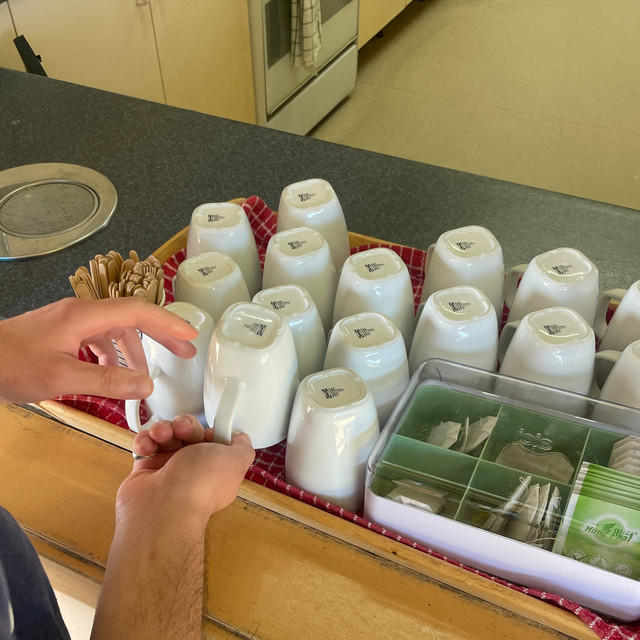
they have like little motel mugs that we spoke about last week. I’m not going to get into that. There’s too much beef about the motel. Yeah. We’re going to, we’re getting flamed about the mugs in the DMS. Stop sending me DMS about the mugs. Yeah. And like, honestly, listener, I’m fighting not to make comments, but I’m going to be the bigger man and I’m going to hold my tongue. So you walk in and they have one of those cute little like in
built a boiler things. Oh yeah. Press the button. Press the little thing and then hot water comes out. Yeah. And that feels like a very like, Oh, I’m in a government community space. Like, and they have a instant coffee, which is like a bit dusty and it’s in like a really big, like tall glass container. And then they have like cheap tea bags. Last time I went,
they actually had tea too, but the budget got slashed and now they have like twinnings or whatever. Okay. Disappointing. But like, that felt like a cute, like welcome to this other kind of space. Yeah. Yeah. You can have a cup of tea. Yeah. Okay. So this is a cool way to like get into another like physical aspect of the place. And
like, I wanted to kind of situate it in the funny kind of like geological and then just like temporal way that it is. So it’s like, first of all, it’s like, there’s a little shed out the front of the gallery that you see before you go into the room of, you know, like maybe like 1800s, like farm and
like production equipment, like stuff that you have to operate by hand by turning wheels and then like cranks turn on each other. And then you get like one newsletter after 15 minutes of like sweating, you know, and you’re going to do it all again. I’m sort of, I’m editorializing a little bit. So, so you’re kind of surrounded by this like physical remnants of yeah, colonial history,
you know, like white settlers, like probably had heaps of land out there back in the day. I mean, it was just a fucking like, you know, it was a land grab, like in any colonial situation. So yeah, there’s that. And then like, um, we were joking about like the pizza oven, like that they probably installed in like the nineties or two thousands is like, cool. Now we, now we also have a pizza oven, like its own kind of funny, like modern Australian, like,
you know, pizza, like we like pizza in Australia. Um, so there’s that. And then like, um, plus when we’re talking about like its location and we’re like, we’re talking about Western Sydney a lot on this episode. And I was just saying before we were recording, like, it’s, it’s kind of so funny and neat how, um, Western Sydney sort of rhymes with, if, if I can use that metaphor, like rhymes
with our sort of like USA influenced idea of West. I’m going out West where the cowboys are and stuff, you know? Um, so that’s just a beautiful coincidence, like beautiful, tragic, whatever you want to call it. Um, so yeah, that’s, that’s the kind of, I think we’ve kind of like described the gallery or like the exhibition space about as much as we can.
I want to say one thing about it, which is that the, like, there is a shitload of equipment. Like they have like a printing press, they have like a horse hooving station, like the, uh, they have like a full on like shop, like, uh, you know, right. I didn’t get to do that stuff.
I was like, I don’t want to do the museum. I just pretended it didn’t exist. Cause last time I went there with a friend, I had to go into every single room and like take pictures and shit. Whisked me past the, I pulled like a dad at the checkout. Yeah. Yeah. Yeah. We’re going to the checkout. But yeah, it dwarfs the art. So it’s like Fairfield city museum and gallery, but like
the most of the space is the museum, but like for us, most of the space is the gallery. Yeah. And then I just want to make like a small comment and maybe tease an upcoming episode, um, about Western Seared. We want to interview like some friends and some artists cause it’s like a really fascinating process, you know, that’s, that’s been happening for whatever,
whether you call it like the gentrification or just people’s minds open in and being more willing to, you know, leave new town on the weekend, which like we’re all for, but, um, opinion, like, I guess you can feel a little bit bubbled where it’s like, you know, um, you talk to one person who’s like cool or woke or whatever. And they’re like 21 and you’re
like, I went out West and they’re like, Oh my God, that’s so cool. But then also like in the same breath, like, again, we’re talking to some people and I’m like, I live in Ashfield and they’re like, where’s that? They’re like, that’s out West darling. And I’m like those, that like pretty fucked take is like still common. Yeah. Yeah. Totally. Yeah. Um,
so yeah, I just like the jury’s not out. Like we’re not this, whatever this project is out. The jury is out. Yeah. The jury’s out. She was still out. They haven’t decided yet. Yeah. The jury’s out. Um, culturally. Yeah. That’s right. Yeah. Good. Honest correction is what I’m saying is like, it might feel like, I don’t know, with any progressive take,
you’re like in your bubble and you’re like, yeah, of course everyone knows that the West is important and that we shouldn’t fucking be dicks about it. But then, you know, really speaking, like as soon as you get out of that bubble, there’s still, you know, it’s still happening. Like it’s still right on the edge of, I don’t know. I mean, we don’t fucking know. We’re just trying to get a sense of that. But yeah, it is interesting. And it’s kind of, I mean,
annoying is probably putting it lightly, but like, that’s a pretty fucked take. Fucked take you guys. Yeah. Anyway. So let’s get into it. Let’s get into the show.
Yeah. Okay, cool. So we wanted to like talk about this exhibition kind of from two perspectives. One, like how it functioned, how it was put on and all the kind of like interesting things we noticed about that. And then we were particularly moved by Nicole Oliveria’s work. And we wanted to
kind of give that like a sort of deep dive into how that worked and why that was so big for us. So it’s like 10 labels all in this funny little, yeah. What was it? It used to be a school or something. What were we saying? I don’t know. It was like an old building ranging from active wear
to formal wear, like community driven street wear with like screen printed hoodies. That was chain mail. We’ll talk about chain mail a bit later. What else? There was like experimental dress and like formal attire. I guess you could say there was some stuff that was just out and out contemporary
fashion. Like it’s, it’s, you know, like to do the pastiche. It’s like a confusing dress. That’s my like mean spirited summation of it. But obviously I think confusing dresses are cool. Um, yeah, a lot of the artists, like, well, should we call them artists? A lot of the, a lot of these like exhibits in the show kind of, um, connected to things outside of fashion though. So it kind of talks
about, you know, people’s heritage or like people’s community and like, uh, or even people’s story, like coming to Australia from like Africa, for example, was one of them. And like, just kind of exploring this sort of interesting, like human element to the fashion exhibition, or even just
like looking at a, at a, at an outfit, you know, a lot of the time, most of the time in the fashion that we wear, it’s very abstracted away from individual stories and stuff. And like, that’s what we were sort of complaining about with Indigo last week, two weeks ago, we were all saying like, fuck fast fashion and like, you know, briefly complaining about, and we could, we could complain
more, but you all know what it’s like living in the hyper real super, super modern capitalism thing, which is this sense of like alienation. You’re alienated from your labor. You’re alienated from your friends, like alienated from your family. Like all of these sort of external forces are pushing you us away from each other. The, like the great atomization of the 21st century,
but something like this was a really beautiful, like kind of rally call almost to, um, slow down, you know, in terms of your consumption, like, yes, the shirt is expensive, but we were saying last week, a pair of pants is going to last a hundred years. So to kind of like circle back and sum up
the show as a whole, we kind of left feeling really like wonderfully grounded, even though we didn’t know anyone in the show, it was just me and Aiden and like a guy in his family. Um, we sort of left feeling like it’s possible. You can, you can live your life with, with connection to family and heritage
and have that speak through your art or your fashion and your, the way you actually live your life. Cause it’s one thing to, to have a photo essay about your great grandparents and like, dah, dah, dah, you know, like you’re sort of doing art speak about family, but then it’s another thing to actually like intimately connect that to yourself with the fabric you’re wearing on a fucking beautiful
Saturday, such as today. Yeah. And I definitely felt like that was part of the, like, you know, that was part of the peace we were feeling when we were seeing this exhibition. We were like excited by the fact that like a story could travel through a garment. And we, as like you said, like, we like, we’re, um, degrees of separation away from these people, like, you know, Gemma and you,
one of the people from uni and stuff, but we didn’t know any of these designers like in person, but we still felt a connection. That’s a really exciting, uh, function of art, especially when it’s like, okay, cool. We don’t just have to accept that this fashion has to be anonymous and, and massive. It can be small and local. Um, but yeah, also like it made me think about the whole,
like, I don’t know, Australia’s multicultural project and like the verb that’s bandied around by like politicians is like tolerance. I hate that fucking word. They, I remember, I remember them telling us like, there was always spiels about be tolerant in primary school. And I was like, like, why, why are we using this word? You know, like, um, it sounded to me like there was no
expectation for any child to understand someone from a different culture, which is like where true love can come from. You know, you can’t just like, oh, okay, I’m going to fucking, I’m going to tolerate the people that are not like me. Like that’s just, isn’t that disgusting on the surface? Like, how did we get so far away from it? Just to start with to put up with, yeah, to put up with someone
like if you’re tolerating a roommate, like you’re leaving that house, you know what I mean? Like that roommate dude. Yeah. Yeah. You, you’re leaving the house. I’m sorry. Yeah. So what the fuck? So is that what we’re saying? This did like this, like we, we learned and we felt about these other cultures that like, we’re not a part of and it like was exciting. And, um, so it’s interesting
cause yeah, so we’re trying to move away from fucking tolerance and into something. Yeah. Like real understanding the same word that came to my head. Like before you said it, you’re like, you said like love and that’s what, that’s what I was thinking. Yeah. Like before you said it, I was love and understanding baby. Yeah. Just quick aside. I was walking past like Ashfield mall and they have a little like community building with actually some really cute, like, um, paintings on
the front of like local Ashfield scenes, like the West’s RSL and stuff. Um, and like, obviously Ashfield huge Chinese community that was like a big, it was like Friday night or like Friday Arvo and the whole hall was just like, you know, older Chinese couples doing like some kind of
organized dancing. And I just like, my mouth fell open and I’m like, that’s so fucking exciting. It’s so beautiful. Yeah. And like, I’m not trying to be like, Oh, I’m so cool. But it’s like, that feels great. It just feels really great to be able to like see and appreciate and feel love towards a culture that like, I can’t speak the language. Like I am outside
of it. Um, but you know, I’m getting a piece of something here. Like I’m getting a piece of like how we’re the same and that’s fucking hot. Yeah. But it’s interesting because I do think like on, on the other side of that, you have like kooky, like cultural appropriation, which is like, I mean, if we want to be really generous, it’s like people trying to hit something
like acceptance of love and then like missing the mark, you know? Yeah. Um, but yeah, that’s kind of like that spectrum of like tolerance versus tolerance is on one end and then like genuine love. Oh, it goes even worse than tolerance, right? Like, of course that’s on like the beginning of the good side. Yeah. Yeah. Yeah. Yeah. Yeah. Fucking cool, man. Yeah.
To be explored further. To be explored further. Yeah. But this is a big like story and I don’t know about other cities, but we know it’s a story in Sydney. Of course it’s a global, thing, but yeah. Uh, TBC. One, one more thing that just like came out of that show, which I’d never heard of before was, um, it’s had like a little photo and a placard and they
were like, is this Western Sydney fashion fest, which I didn’t even know was on, but I think they got to do it again, like this year for the first time since COVID and that’s just fucking dope. Like an extension of what was happening, like in a room full of Western Sydney designers, um, and, and creating a space for that. Um, definitely hit that up next year.
So Aidan, do you want to describe to me what chain mail is? Uh, chain mail is a Western Sydney fashion label started by Julian K. Ruse and Natalie Hoifen. Um, we’ve spoken about one of Julian’s works on the show before. I was like walking
through Parramatta. I really loved it. Um, so yeah, this was kind of my first time, uh, hearing about this label, but they’ve been around, I think they had their first collection in 2018 and they just dropped their third collection like this year, a few months ago. Um, and it’s very much like Sydney, Western Sydney street fashion. It’s like their bio is like
for the community by the community and they have their postcodes. It’s like homegrown two one six one two one six zero. Um, some Western Sydney postcodes. And, um, I was a bunch of shit in the way that it was delivered that I really like. So I think they do these like, or they did like an event, like it’s like in a car park, right? Like chain mail cap capsule
three collection event launch. Um, with some like really sick photos. They’re like the clothes are in the fucking back of a car and like everyone’s hanging out and like eating and like showing their bags. And it’s just like, yeah, definitely got that big community vibe in like Maryland. Um, but yeah, there was a lot about the way the work was positioned,
which I thought was really interesting. So there was like a video of like the event with like some like cool branding and stuff. It looked, gave me like slight, like music video energy. Yeah, totally. No, literally people were like freestyling in the parking lot. Yeah. There you go. It had like a hip hop element to it. There you fucking go. That’s sick. And then they had this like black, um, what’s
is that? Like a little clothing rack. Yeah. Like a clothing rack, like a little sparse clothing rack. And it had like six or seven pieces from the collection, like long sleeves and like a sweatshirt and like this really cool, like red bandana, like red patterned bandana. And, um, it was cool because like, obviously that clothing rack is like saying like you’re in a
shop, like thumb through these, try them on, like take them home, buy them. But then they were positioned, like each one was positioned, like I’m a piece of art. Like they had a wall text and they had like a title and it was this really cool, like way of like repositioning, um, you know, what a garment can mean. And I felt like so much of that. I really like,
you know, just to take it out of the context of like a shop where there’s like a billion of these on the rack and to put them like in an art context, like not to say like, oh, we’re, we’re venerating by putting it in an art space, but it just like was enough friction to kind of trigger my brain to see the clothes in a different way. And I’m like, damn son,
like this, I could really feel like the journey of this garment from like conception to community. And then to have like the music video of like the creators and the community and the people, it was just really exciting. And then I guess maybe, um, to speak on like the actual physical garments a little bit would be cool. The bandana is just like clipped on very gently by like a little thin, looks like a silver necklace
or something. And it’s just, um, vivid red with like a sort of maybe golden, like a, a soft yellow golden screen print on it of like, yeah, broken chain link fence and like some Adidas slides, a burning car, fluffy dice, and like a pair of like rosary necklaces with cross on them,
like kind of symbols, I guess, of Western Sydney and like the chain mail logo. Really fucking cool. And like, um, it’s, it’s, it’s, it’s kind of a, a nice, like tense little piece because it, it, it sort of, I mean, it’s got like a tension built into it, right? Like the, the scarf, like a
head scarf, especially is like, um, it’s kind of like Louis Vuitton and like Hermes and stuff, you know, right. It’s like European, like high fashion connotations or even just like, you know, vintage European fashion connotations, but then to chuck like, you know, chain link fence and like Adidas slides on it. It’s just like, that’s a beautiful, um, yeah, we’re looking at like
thumbing through the like Instagram right now. It’s a beautiful combination of elements. Yeah. Fuck it, man. Um, cool. And then, uh, another one in, in the show that kind of was set up in a similar fashion was Nicole Oliveria’s work. Um, and they had a similar
like composition. So there were three pieces. I’ll just outline them for you. It was a video work, um, which was the artist mother wearing pieces from the show, kind of doing domestic labor, like the laundry and the dishes. I was pretty intimate. And then you really got to
see this, like, it is always very cool when you have, like for me, when you have like an interplay with the video work and then like objects from the work and it’s really like creating this three dimensional feeling of engaging with it. And I think it’s quite a short video as well as a few minutes, which is like, bruh, make your video art short. Like, sorry, but just do it. Like,
otherwise people are going to like stand awkwardly and then leave. Yeah. And also just like to go a bit more into that, like the, I just love seeing, it’s like seeing the prop from, um, Moulin Rouge. Like I just love seeing the thing that was on video in the gallery next to me. Like that’s just, for some reason that always gives me, it just, it sets off sparks in my brain. I just really like that. Agreed.
We’re very used to cinema being like videos slash cinema being encapsulated or like just totally bubbled in these island universes. Like I just finished the Obi-Wan series and it’s like its own little world. Like that’s the whole, all that big Disney money goes into. It’s like, it’s like a little world that you can just like,
yeah, I’m living in the fucking lightsaber world now. And then yeah, to see the lightsaber in real life, always exciting. Um, yeah. So that work was called home, which I liked and, uh, video work. Yeah. The video work was just called home. Uh, and, uh, it was shot in her family home in Mount Druitt.
Like very calm, steady footage. Like it’s all on a tripod and it’s like quietly, you know, washing up or quietly like getting ready for dinner, you know? Um, and then the next kind of, so you’re panning from the video, uh, across to the next wall and Nicole’s work has taken up like a whole big wall in the gallery. And the next kind of like part of the work is like her clothes
that she’s designed, um, just like on the wall. And then we go one further and there’s this big, like really stunning, uh, collage work with like, I don’t know, maybe like 30 or 40 little elements and their family photos, I guess, like these really classic, like family photos, like
your brothers and sisters and like, or you’re all kids and you’re wearing like dorky little clothes, which have like wrapped around and become kind of what we’re still wearing, like cargo pants and like jelly sandals and shit. But then she has like imposed like street fashion garments, like a little pieces of them onto the family photos, which creates this like hilarious and wholesome
and beautiful, like, you know, historical contemporary moment. And like collage, fucking hard to do. Yeah. Cause it’s so easy to do. It’s so hard to do. And like, this was just stunning. Yeah. And we loved this. And just like the combination of, you know, you’re an awkward kid,
but then pasting on these like beautiful models, like legs in beautiful pants underneath this, this funny, like collection of different scales and different moments in people’s lives. Yeah. And there was an element to, I went on like a family holiday with my parents and my little sister, like a few years ago, went to Malaysia and we had like a WhatsApp group and we would create
like memes of each other. Really? And yeah. And that was like the running joke the whole time. We would like meme each other, like really classic meme, like a zoomed in photo of your face and then like top and bottom text. And, um, there was this moment where we were like missing a plane and everyone was freaking out. Like my sister was crying and shit. And I was like snapping pictures to like put in the
meme group chat. But it was quite funny because I feel like there’s something really like, there’s this one that I really love. It’s like, what, maybe like a six year old girl. And she’s got this like very like, what is her expression? Like, I don’t know. She’s got that kind of like, it’s, it’s, it’s not, it’s not quite like a, I know about being posy in photographs.
Yeah. It’s beautiful. It’s a very like earnest moment, but she’s gotten ever so slight, like forward to her brow. Like she looks pretty powerful and like cool. And she got like this little like kid hand and then like, boom, we impose like a street wear hoodie, like this oversized street wear hoodie. And it gives me like some brother, the street is the other way around from the nineties or whatever.
Do you think she’s really wearing the street wear hoodie? Nah, enhance, enhance, enhance, there’s no way she was wearing a hoodie. Look at that. Yes, she is. Damn. Is she? Yeah. Anyway. And this kid is just like, happens to be wearing this like drippy oversized, like colorfully striped hoodie. And it just says like street wear, like on her belly. And it’s just dope.
But there was this moment where it feels like there’s a moment of humor in this work where you’re like, like chopping up your family photos. And this is a funny thing to do. Like it’s kind of disrespectful. And so like, you could imagine a certain family member being a bit like, what the fuck? Yeah. Yeah. Yeah. Yeah. Yeah. Leave them alone. Don’t do me like that. Yeah. Yeah. Yeah.
Like her, what looks like her dad or like an older dude, like boom, like slap some drip on him. Yeah. Yeah. Yeah. Like that’s hilarious. Like it’s beautiful and hilarious. Yeah. I wonder how like her family took that man. Yeah. And then I want to say one more thing just about, um, like the relationship between like money and art and fashion. So we checked out like
Nicole’s website before this and there’s just like a shop link very much. Like we’re on Shopify. We’re just like buying clothes and like the pieces from the exhibition were on there. Like the piece that her mom was wearing in the home video, you could just buy them on the shop. And I’m like, damn, that’s cool. Like, yeah. It’s so different to see like, uh, like it’s so different to see a
clothes shop link versus like my artwork is for sale, you know, 500 bucks or whatever. Exactly. If you see a shop link on an artist website, it’s like some other side thing that they’re making. And that’s just some, like my guess is that some bullshit about like art economy where it has to have like certain levels of, yes, uh, it must be kind of hard to buy and it must go
through like several pairs of hands and you need to like, you know, understand the dance because that’s how you sell it for 10 K. Like you can’t just go like buy it for 10 K. And by the way, like we condone you selling your stuff for 10 K. Like that’s cool. And we think you should do the dance, but yeah, it is, it hits different this way. A hundred percent. Yeah. And that’s like,
one of the like cheeky things about like this fashion as art in an art space, but it’s still just fashion is like the fashion people get to just put a price on it. Yeah. Sure. Then the art people have to be like price on inquiry. True. Yeah. We don’t know enough. Like we don’t know shit. We’re still trying to think about like, I would love to know more and I would love to get someone on
who knows a lot about, you know, how art is actually bought and sold in Sydney in the world. But like, I think until then, until then we’re just like pointing at things we see and yeah. And it’s, we’re going to be real with you above all else. You just got to be real, bro. I said to you guys, like the other night I was like stoned and sleepy. And I was like, people just got to be real.
And like, I think we were all like sleepy and stoned and you guys like took it quite earnestly. Yeah. No one made fun of me being like sack of whatever. Like you’re on the shoulder. You guys were like, preach brother. And then we all got into bed and we went to sleep hugging. Beautiful. What a beautiful, sleepy Paddington bear evening.
Do you want to speak on like, you were particularly like jazzed about the, like, what would you call them? Like the pants and stuff that were like split up or just to speak on like the actual material. Go to the pants. Processing that happened with Nicole’s stuff. Yeah. So we had this, a picture of, they’re actually on the website too, I think. Man,
this is an incomplete list of pictures you’ve opened here, Aiden, I reckon. You didn’t open all of the everything you gave me that was like after these are all just me in the gallery. I’ve been to everything. What about that last? Yeah, there’s all me, bro. I like that. I know what I fucking did, bro. You know what we’re going to do? We’re going to jump onto Nicole’s handy shop link.
Yeah. Nicoleoliveria.com slash shop. That’s what I’m saying. All of her garments are documented clearly and directly and honestly and honestly and hopefully. Yeah. I’m going to open that shit, bro. Hell yeah, baby. I’m going to open that shit for you. Ah, they’ve got the reflection of that too. That’s cool. Speak on it, brother. Speak on it. So yeah, on the wall, um, are the clothes,
it’s like the, the actual garments made for the show and it’s like, yeah, it’s cool. Cause it’s on the same wall as the collage work. Right. And, um, the, the, the clothing are sort of, uh, in comparison to the clothing rack, like they’re a bit more sort of in a privileged position, right? Like a bit more of a special location, but like vintage shops do that too. It’s like,
these are the nice t-shirts. This is the a hundred dollar black Sabbath t-shirt up on the wall and like, we’ll get it down for you. You can try it on, but it’s, it’s on the wall. We’re showing it off. Um, so that was the kind of like curatorial, like feeling of the, of them. And then, yeah, one of the ones I wanted to talk about was this pair of pants, um, where it’s like, she’s taken two jeans and split them right up the middle of each leg and then, um, joined them
back together so that the waist of the pants, uh, mismatch. And then the hems right at the bottom of the legs match up in terms of length. So the black outer pants are like, um, extruding above, you know, you could say the waistline of the like low cut jeans. And I just thought it was doing all
this cool stuff. So the inside pair, uh, blue denim with like a bit of a stonewashed, like fade on the thighs. And then this sick, like embroider or like maybe even sequined kind of like, I don’t know, dragon or tribal tattoo looking thing, just like a cool, like clothing stuff going on.
The other one that I loved was it’s like a polo shirt. I wonder like, yeah, it’s like, uh, what is it? It’s like a Haley Hansen kind of vibe, like, like Nautica kind of, um, shirt, but it’s, uh, got this like embroidery on it, like this beautiful flowery lacy stuff around the collar.
Another like thing, it’s like not quite like, I mean, yeah, it’s poking fun in a way, right? Like the, the like dad wear of the outer shirt versus the like sort of frilly flowers on the inside, just like a wonderful combination of like, like I’m sure she saw her dad wearing a shirt like this,
right. At some point. And it reminds me actually of what Indigo was saying last episode. She’s like, like I’m taking inspiration from people in my family and my friends. Like I’m going to wear clothes that make me feel like I’m like you right now. Yeah. Beautiful. I love it. Man comes through with the descriptions. There you go. You hear that listeners man is technical. I’m technical. He’s got the eyes.
He’s got the ears. I rolled in here to record this today. And Matt was listening to a tape recorder.
Yeah. I’ve borrowed Glenn’s tape recorder. Man likes tools. It was funny. And I bumped into some of your friends I’d like never met before. And so I got to see like you through someone else’s eyes too. And yeah, but they were like noticing that too. They were like, Matt loves like tools and how things work. And I was like, yeah, he does. Yeah, he does brother. And that’s like,
it’s that moment where you like feel seen by someone. It makes you feel good. Like when someone’s like, you do X or you’re good at X or you’re really bad at X and you have really smelly farts. And you’re like, true. Like that one hurts, but I’m still seeing you. But like, um, that’s cool when you get to see like someone else see something or that was a nice moment. Like in our friendship, I was like,
Matt’s been made more real. He really is that way. So I want to like, I think we’re going to wrap this episode up pretty soon. Um, cause we’ve been talking, but I just want to, yeah, we’ve been talking. I want to have a like quick discussion of like, um, like yeah, this feeling like going from like being seen by friends and being seen by people and this like cultural moment of kind of solipsism
and alienation. Like, you know, it’s a few steps away from talking about fashion, but it’s definitely related to, you know, why we make art, why we’re interested in art. Yeah. And it reflects the feelings that we had after seeing this show as well. We were talking all about this. True. Good point. Um, and yeah, like, you know, what are we hoping to achieve as people through engaging in art and
spending our weekends, trying to understand like other people and the world around us through, you know, forms and creativity, like really what kind of work are we trying to do here? And, and what are we trying to get out of all of this? Like, yeah. And I kind of want to tie that into now where like couple of years into the fallout of COVID and like working from home. And especially
if you’ve got like a desk job or whatever, it seemed like in the beginning, everyone was real hyped on work from home. It was like, fuck yeah. Like I get to do my laundry and like cook a nice fucking piece of fish for lunch. And, you know, I don’t have to commute. And there were all these beautiful things, but now I’m noticing like a slight shift where it’s not embarrassing to like go into the office for a day or two out of the week. Like you’re not a nerd if
you want that. And like, I’ve been doing that. Now I go in like once a fortnight, whereas for the last year I’ve gone in like once and now I go in once every couple of weeks. Um, and there’s lots of moments I think like that we’re missing, which is just like incidental moments of human connection. Like even just coming home at 5 PM, like it sucks. It’s in the
confines of the nine to five. But I was like, Oh, I get to like finish the work day with the rest of the suburb that I live in. Like, this is kind of nice. Yeah. Um, but yeah, there was this really cool moment the other day. Like I was heading like up the street before work to like get a coffee or something. And it’s like the school run is starting and there was this nonna and like maybe an eight or nine year old boy. She’s maybe 60 and he was
wearing like, yeah, like the same color of your socks. Like what is this baby blue? Not baby blue. Bell blue. Let’s say bell blue. I don’t know what bell blue is. No, do I, but it sounds nice. Fucking blue socks. School uniform blue. This guy’s, this kid is wearing Aussie school uniform blue and it’s like a little sweater cause it’s cold
and he had the biggest cheesy grin on his face and so did his nonna and it was so sweet. And they were walking to school together. Like I fucking love you. That’s cute as hell. And I was like, fuck, like I just couldn’t help but feel like the like resonance of that relationship and how human it was and how beautiful it was. It’s like this crispy, sunny morning.
And, uh, and it was just, it was dope. And it like, it really made me reflect on, you know, the conditions of labor and working by yourself, like five days a week, like, you know, all your coworkers are behind screen. Like, especially like my work, I can go days without needing to talk to anyone. Like I was joking this week. I was like, bro, I’ve been in the matrix. Like it was
just me and the problem. And you were like, yeah, it’s, it’s like a little dystopian short story where like I wake up, I’ve solved the problem and I like go outside and there’s just no world left. And like, no one notices. And that shit is scary, bro. It’s fucking frightening, man. Like to think like, yeah, really, what is all this for? And what are all my like labor hours for? And like,
what the fuck am I doing? Like, it’s horrifying. And like, it can’t be swept under the rug. Like no more, brother. Yeah. Um, so yeah, I don’t know. It’s just a little story, but it is like, I guess like seeing stuff like this and like our drive to, to like make this content and engage with artists is I think for me, like an effort to fight that, like overwhelming bullshit capitalist
fucking squeeze you into a box shit. Yeah. We don’t need that shit. We don’t need that. We’re trying to fight that shit. Like it is, it does genuinely feel like a fight, dude. Yeah. We kind of jokingly posted this this morning, but like there was a guy that was circulating like a book that he’d self publish and it was like a utopian, a design for utopian society. And like, yeah,
we were laughing about it. Cause it is kind of funny. It’s like, he’s like, when I don’t have a picture to illustrate the point, I’ll just put in one of my old rock climbing pictures, but like beautiful, what a beautiful instinct to have or beautiful, um, energy to just be walking around with. And this was like an old fella. He was 80 dude. And in, in the book, he has his email phone number and home address. If you want to make a personal connection and he died
last year. This book was published in 2021, but he was like in the book, like in print, he’s like, you can find me at Ashfield mall doing a recorder performance, like every Saturday at 11, like come say, Hey, damn, damn. That’s some fucking real shit. That’s really living your life. All right. Well, if you listened this far, like you’ve had ample time to just chuck
five stars into Spotify, five stars into Apple podcasts, tell five friends, follow us on Instagram, hungup.au. Just tell one friend, tell one really, um, uh, impressionable friend that this podcast makes you cool. Tell the friend that you like bully in the group. Tell the friend that you’re worried about that they need to start listening to some real art
criticism and investigating the Sydney scene and the Western Sydney slash new town problem. All right guys. Catch you in a couple of weeks. Catch you later. Bye.
Thank you.
Show notes
We visit Who Are You Wearing at @fairfieldcitymuseumandgallery and go deeper on @chainmailthelabel and @nicoleoliveria works. We talk about Western Sydney, tolerance v love, anti-alienation and the solipsism of WFH. Nicole’s site here: https://www.nicoleoliveria.com/, FCMG site: https://www.fairfieldcity.nsw.gov.au/services/fairfield-city-museum-gallery/exhibitions